
Winter Trend: Stable
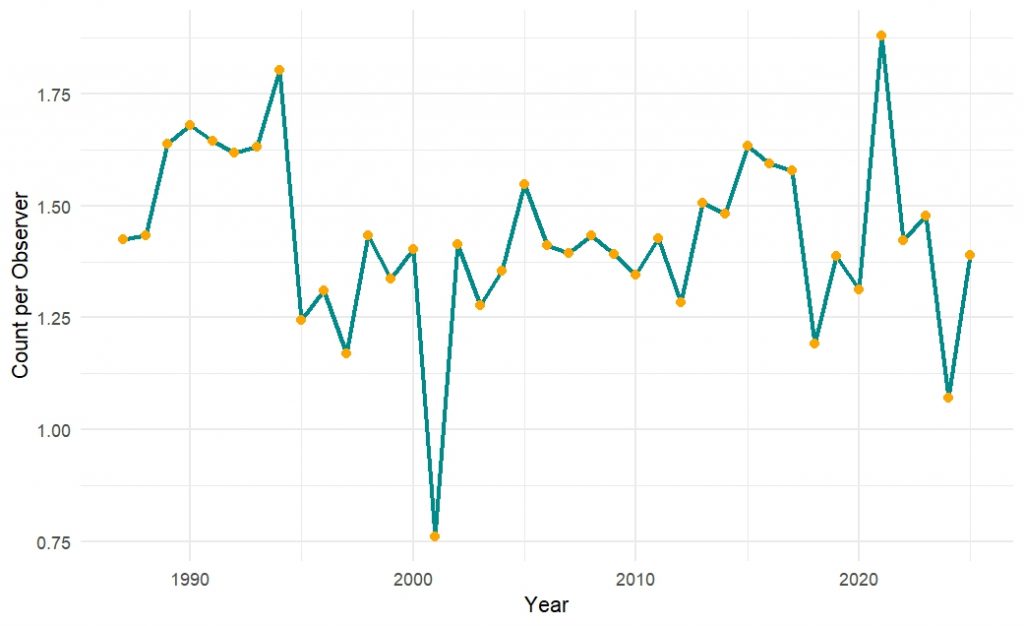
White-breasted Nuthatch Data 1987–2025
White-breasted Nuthatch data from the Backyard Winter Bird Survey (1987-2025). Each orange point shows the average number of White-breasted Nuthatches reported per observer in a given year. The blue line connects the points to highlight year-to-year changes.

What’s the Story?
White-breasted Nuthatches are a favorite across New Hampshire! Their nasal calls are a familiar sound at backyard feeders. Unlike their smaller relatives, the Red-breasted Nuthatches (whose numbers rise and fall dramatically) White-breasted Nuthatches are consistent residents. Some individuals may move slightly south in harsh winters, but most stay put through the cold season.
Our analysis of Backyard Winter Bird Survey data from 1987 to 2025 shows that White-breasted Nuthatch populations in New Hampshire are stable, with no significant long-term trend. That means the ups and downs you see are part of their normal cycle, rather than a sign of long-term decline. Changes in food availability and weather can all influence the number of individuals counted.
White-breasted Nuthatches prefer deciduous and mixed forests, where they forage along trunks and branches for insects and seeds. This sets them apart from Red-breasted Nuthatches, which are more closely tied to conifer forests.

Feeding Tips
- White-breasted Nuthatches love black oil sunflower seeds, sunflower chips, and peanuts.
- They also enjoy suet, especially during harsh weather, and can often be seen wedging seeds into bark crevices to hammer them open.
- These bold little birds can be surprisingly territorial at feeders, sometimes chasing other birds away.

In Your Backyard
- White-breasted Nuthatches often join mixed winter flocks with Tufted Titmice and Black-capped Chickadees.
- They favor wooded neighborhoods, parks, and backyards with mature trees, especially oaks, maples, and hickories.
- White-breasted Nuthatches can travel headfirst when climbing down a tree.

ID Tips
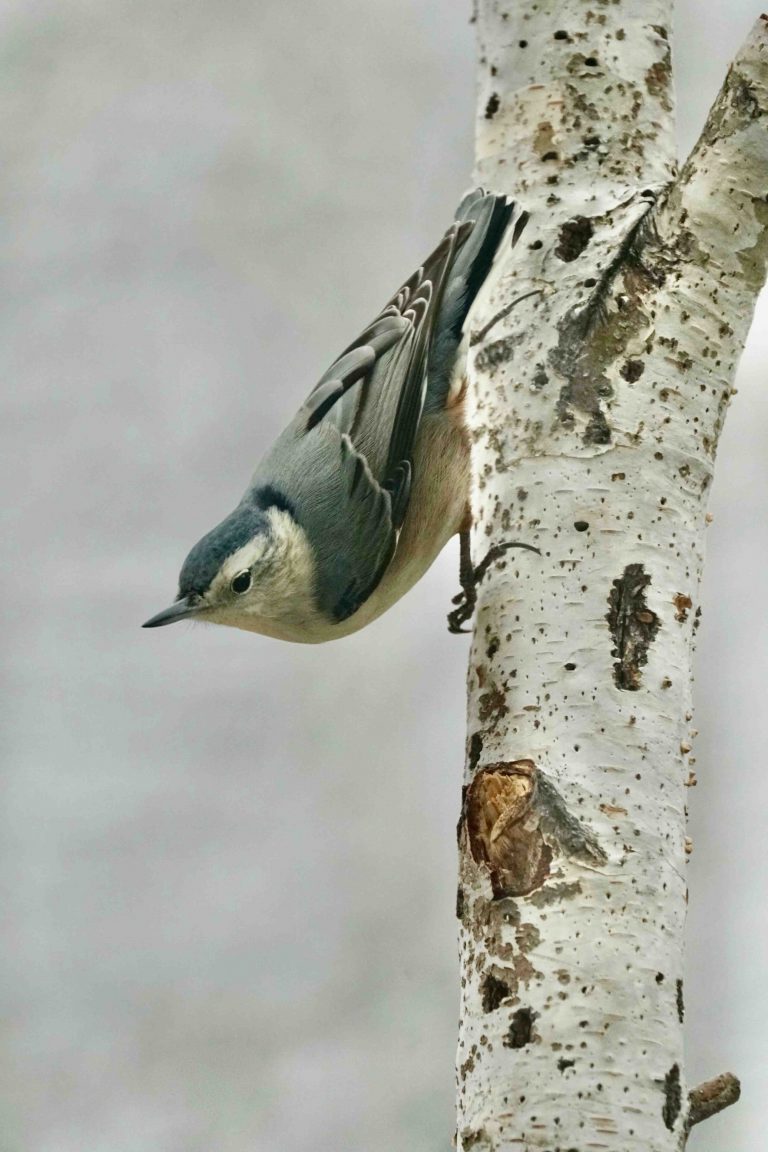
White-breasted Nuthatch by Grace McCulloch.
White-breasted Nuthatches have a white face, black cap, and blue-gray back. They are larger than a Red-breasted Nuthatch.