
What’s the Story?

Feeding Tips
In Your Backyard

ID Tips

Look Alike Alert: Purple Finch

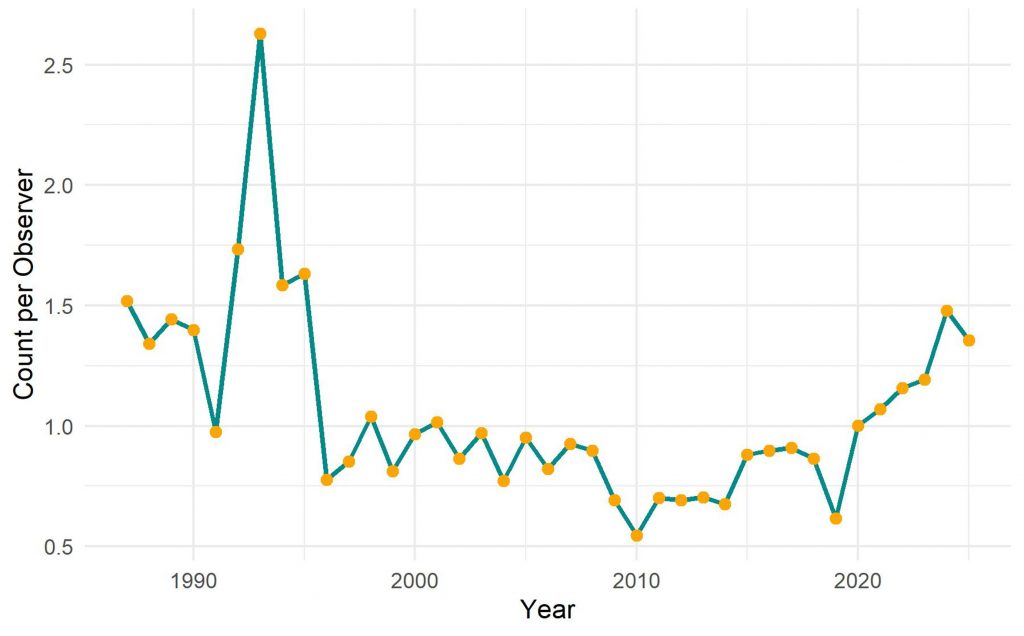
House Finch Winter Counts | BWBS 1987-2025
House Finch data from the Backyard Winter Bird Survey (1987-2025). Each orange point shows the average number of House Finches reported per observer in a given year. The blue line connects the points to highlight year-to-year changes.
House Finches were first introduced to the Northeast in the 1940s, when a crate of birds escaped from an airport in New York. From there, they expanded quickly with the first records in New Hampshire appearing in 1967. Today, House Finches are strongly associated with human-dominated landscapes, thriving in cities, towns, and suburbs.
Our analysis of Backyard Winter Bird Survey data from 1987 to 2025 shows that the House Finch population in New Hampshire is stable, with no significant long-term trend. Still, the data tell an interesting story. In the graph, you can see a steep initial rise as House Finch numbers grew rapidly. That growth, however, did not last. An outbreak of conjunctivitis (often called “House Finch Disease”) caused a major population crash. Since all House Finches in the East descended from the same small introduced group, their low genetic diversity may have made them more vulnerable to the disease.
Conjunctivitis is still present in wild birds today. If you notice a finch or any bird with swollen or crusty eyes at your feeder, take your feeders down immediately. To help control the spread, leave feeders down for at least two weeks and clean them thoroughly with a solution of one part bleach to nine parts water before putting them back out. Regular feeder cleaning is always a good practice. If you find an injured or sick bird, contact a licensed wildlife rehabilitator (see the NH list here).
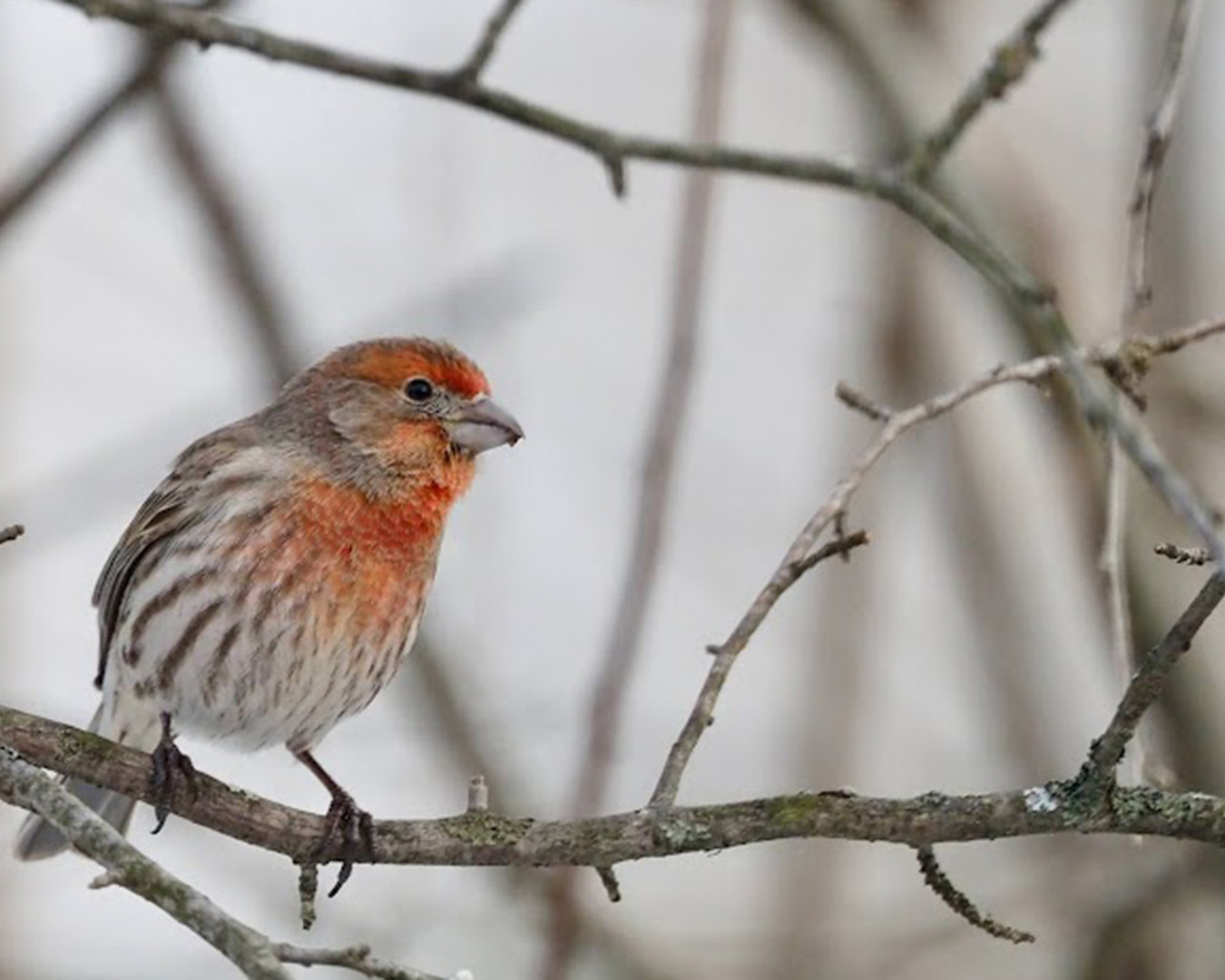
Male House Finch by Caitlin McMonagle, 2024 Backyard Winter Bird Survey
Male House Finches are fire engine red on the head, breast, and rump. However, they have brown on much of their back. Both sexes have a more squared off tail.
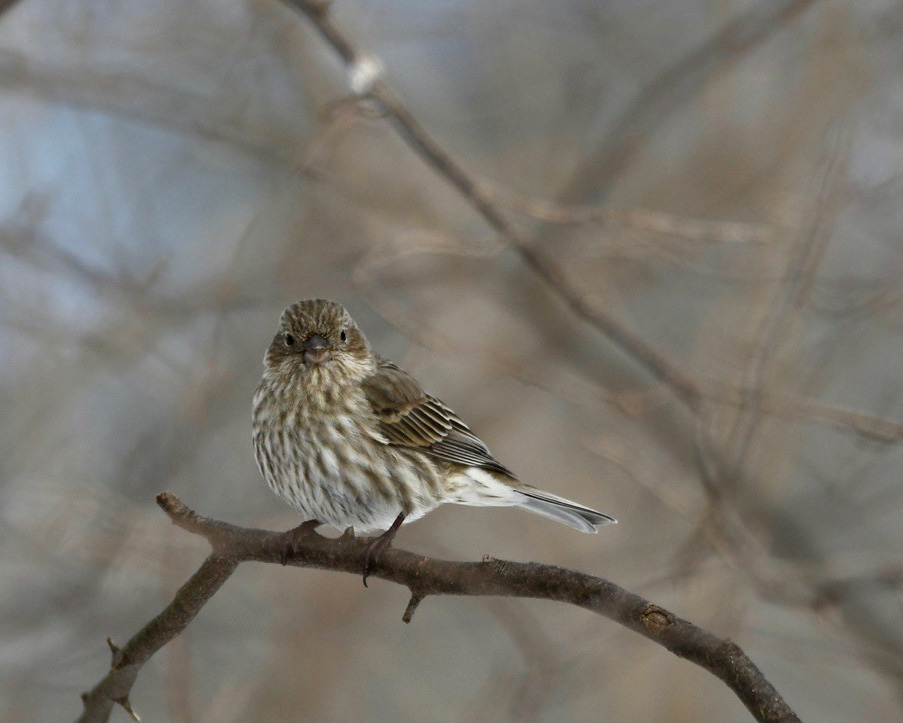
Female House Finch by Rebecca Scott, 2025 Backyard Winter Bird Survey
Female House Finches are all brown.
House Finch are often confused for Purple Finch. Take a closer look. South of the White Mountains in New Hampshire House Finch are more common. North of the White Mountains Purple Finch are.
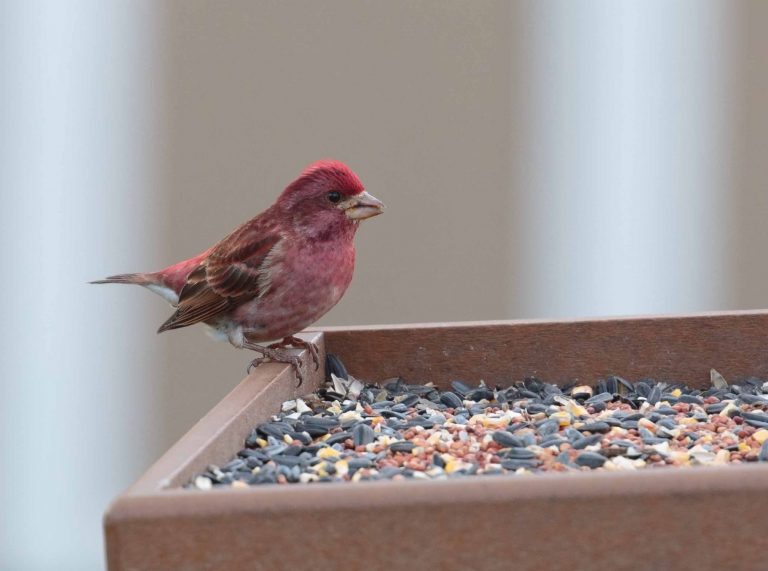
Male Purple Finch by Len Medlock.
Male Purple Finches appear to have been “dipped in raspberry juice” with color on the head and back. They also have less streaking on the back than the House Finch. Both sexes have a deeply notched tail.
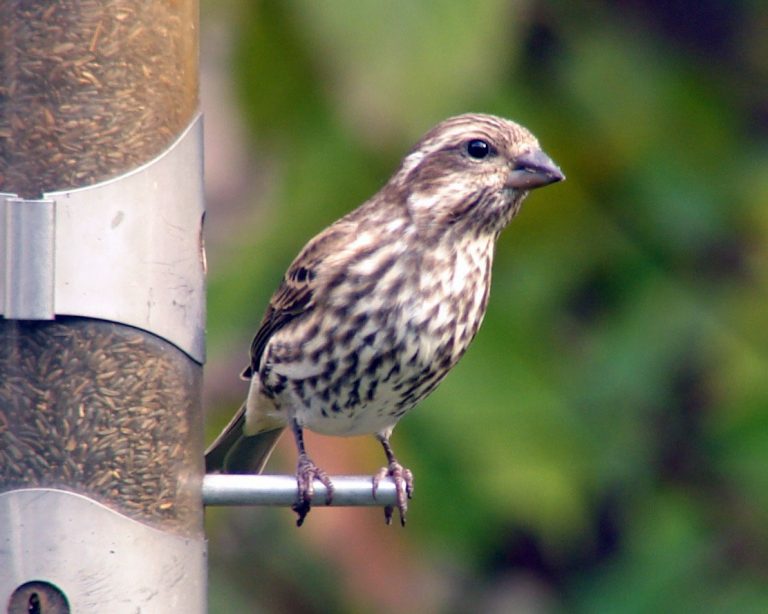
Female Purple Finch by Pam Hunt.
Female Purple Finches are brown with a white stripe above the eye.
Observed Data (points and line):
Each point shows the average number of birds reported per observer in that year. The line simply connects those points to help you see patterns over time.
No Statistical Trendline:
For some species, numbers vary a lot from year to year (for example, irruptive species that move depending on food availability). In these cases, there isn’t a consistent long-term trend, so no statistical model is shown. For other species, analyses may reveal no significant change, meaning the population appears stable.
What This Means:
The graph lets you see the natural ups and downs in counts from year to year. These fluctuations are still important. They tell us about how species respond to food availability, weather, and other conditions.
NH Audubon is a nonprofit organization dedicated to protecting New Hampshire’s natural environment for wildlife and people. Since 1914, we’ve engaged the community through conservation, education, policy, and participatory science initiatives. We are independent from National Audubon, and all donations stay focused here in New Hampshire. Learn more at nhaudubon.org.
The Backyard Winter Bird Survey is unique to New Hampshire and is separate from National Audubon’s Great Backyard Bird Count. Although the two events sometimes occur on the same weekend, we encourage participants to take part in both.