
Support Wildlife in Your Backyard
Even small steps in your own backyard can make a big difference for winter birds. Providing food, water, and shelter helps them survive harsh weather, and safe feeder practices keep the experience positive for both birds and people. By observing and reporting the birds you see, you’re also adding to scientific research that tracks populations and guides conservation efforts across New Hampshire. Here are a few tips to get you started:
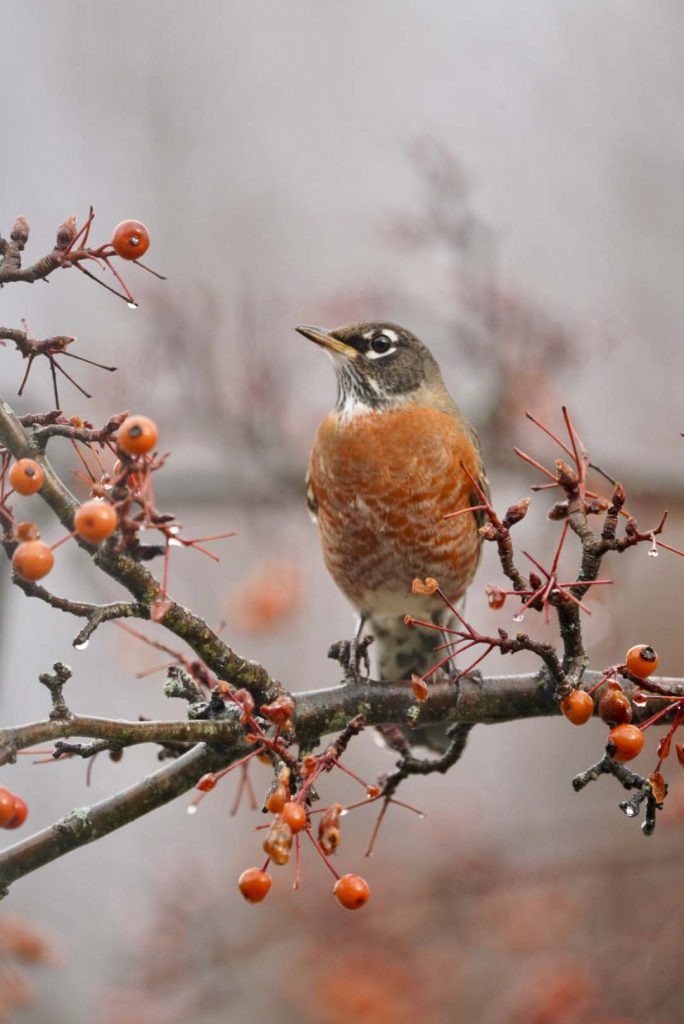
American Robin by Grace McCulloch.
Provide the Perfect Home for Birds
- Plant native trees and shrubs. Native plants not only provide excellent summer habitat, but the right species also supply food and shelter during winter. Oaks, pines, and birches produce seeds and nuts that last through the cold months, while winterberry, sumac, hawthorn, and apple provide fruit that can last through the winter. Fruit-eating winter birds, such as American Robins and Cedar Waxwings, especially benefit from these plantings. UNH Cooperative Extension has a great guide for those seeking to add more beneficial native shrubs and trees to their property.
- Create brush piles. Small piles of branches and twigs offer cover for birds and small mammals, helping them stay safe from predators and harsh weather.
- Provide water. A heated or unfrozen water source allows birds to drink and bathe even in freezing temperatures.
- Leave part of your garden wild. Letting a corner of your yard stay natural with leftover seeds and vegetation encourages birds to visit in winter. Pro tip: dense tangles of vines and shrubs are ideal hiding spots for Carolina Wrens.
Provide the Perfect Home for Birds
- Plant native trees and shrubs. Native plants not only provide excellent summer habitat, but the right species also supply food and shelter during winter. Oaks, pines, and birches produce seeds and nuts that last through the cold months, while winterberry, sumac, hawthorn, and apple provide fruit that can last through the winter. Fruit-eating winter birds, such as American Robins and Cedar Waxwings, especially benefit from these plantings.
- Create brush piles. Small piles of branches and twigs offer cover for birds and small mammals, helping them stay safe from predators and harsh weather.
- Provide water. A heated or unfrozen water source allows birds to drink and bathe even in freezing temperatures.
- Leave part of your garden wild. Letting a corner of your yard stay natural with leftover seeds and vegetation encourages birds to visit in winter. Pro tip: dense tangles of vines and shrubs are ideal hiding spots for Carolina Wrens.
Feed Wildlife Responsibly
- Offer variety. Different feeder types and a mix of seeds attract a wider range of species to your yard.
- Keep feeders clean. Wash feeders at least twice a month with a solution of one part bleach to nine parts water. Air-dry completely before refilling to reduce disease spread. If you notice sick birds or a local disease outbreak, temporarily remove feeders (at least two weeks) to encourage birds to rely on natural food sources.
- Place feeders safely. Position feeders either within 3 feet of a window or at least 10 feet away. This reduces the risk of collisions, helping birds avoid fatal accidents.
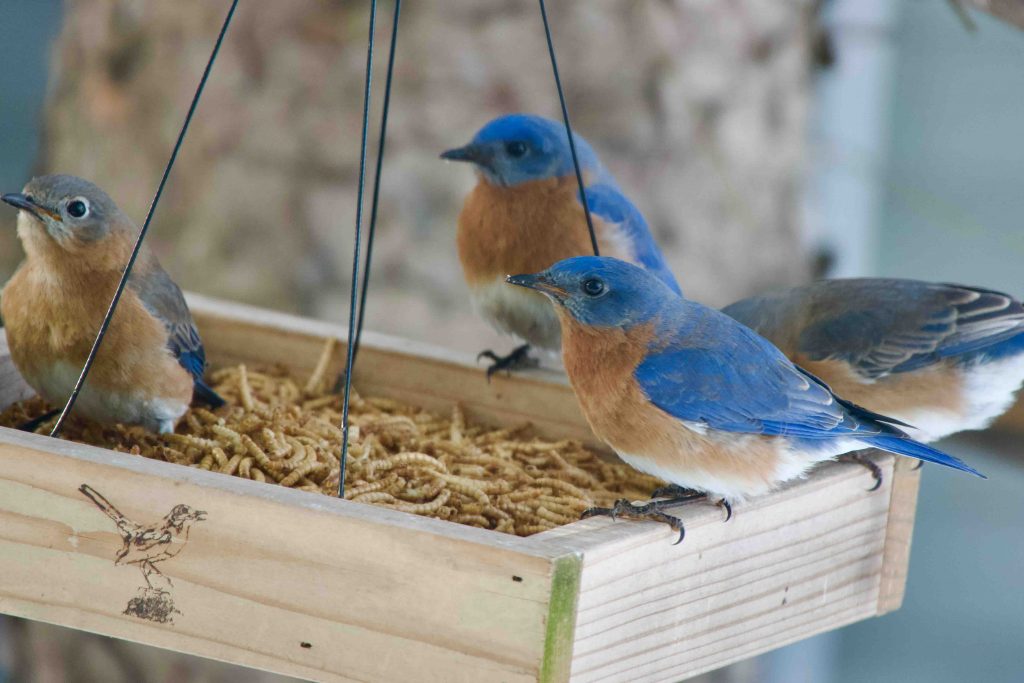
Eastern Bluebirds by Sandra Nicholas 2025 Backyard Winter Bird Survey.
Be Bear Aware
In New Hampshire, bird feeding season is designated from December 1st to April 1st for good reason. Hungry bears are attracted to feeders, and frequent human contact can lead to dangerous situations. As climate change affects hibernation patterns, bring feeders in when weather turns “spring-like” and only set them up in early winter when conditions are truly cold. Protecting both birds and bears requires careful timing.
Prevent Harm
- Watch out for cats. Outdoor cats are a significant threat to birds, even if well-fed. Keeping cats indoors ensures they live longer, healthier lives and protects the birds visiting your yard. Indoor cats can still enjoy watching birds safely from a window.
- Prevent Window Collisions. Add film, decals, paint, or other materials to the outside of windows to make them visible to birds. These elements should be spaced no more than 2 inches apart, as birds can fly through small openings, and the goal is to signal that the window is not a passage.
- Lights Out. Turn off outdoor lights at night whenever possible. Artificial lighting can disorient birds, causing them to exhaust energy or, in some cases, collide with windows. This is especially important during spring and fall migration periods.
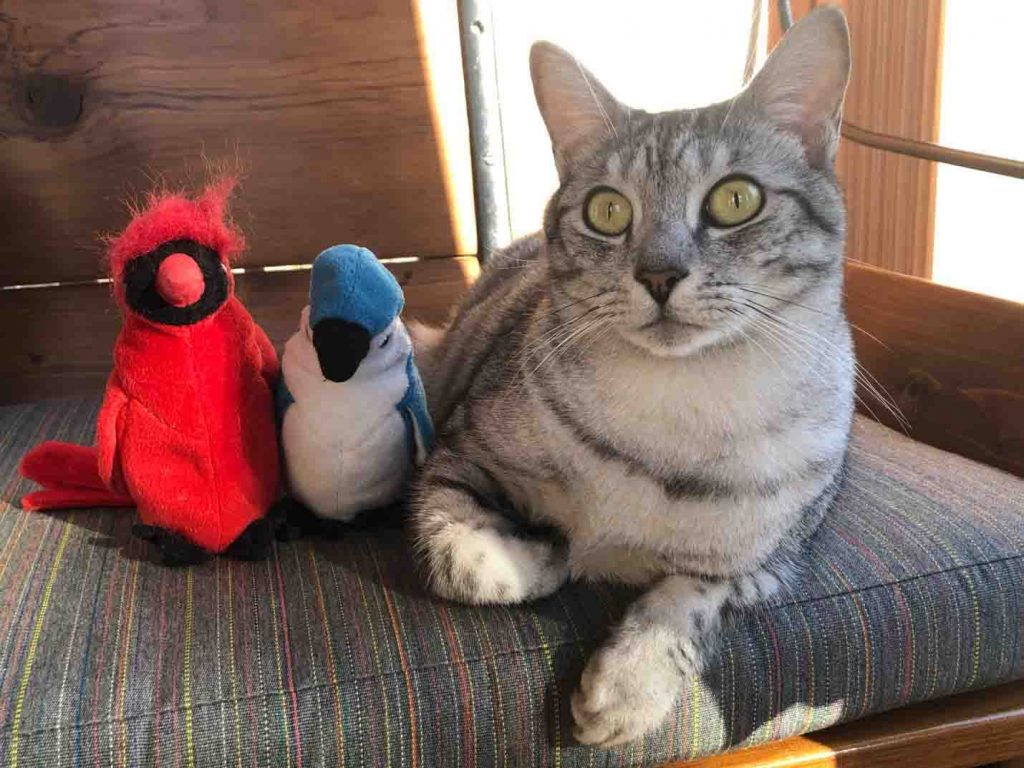
Poe, the cat, enjoys bird watching indoors. Photo by Kathryn Frieden.
Contribute to Bird Research Year-round
Join eBird. Share your bird sightings with the broader birding community on eBird. This participatory science platform connects birders across the world and helps scientists track population trends, migration, and habitat use.
Participate in NH Audubon Programs
Ask your question. Our Volunteer Naturalists are happy to help answer your nature questions.
Volunteer with us. Explore current opportunities and learn how you can get involved.