
Winter Trend: Stable
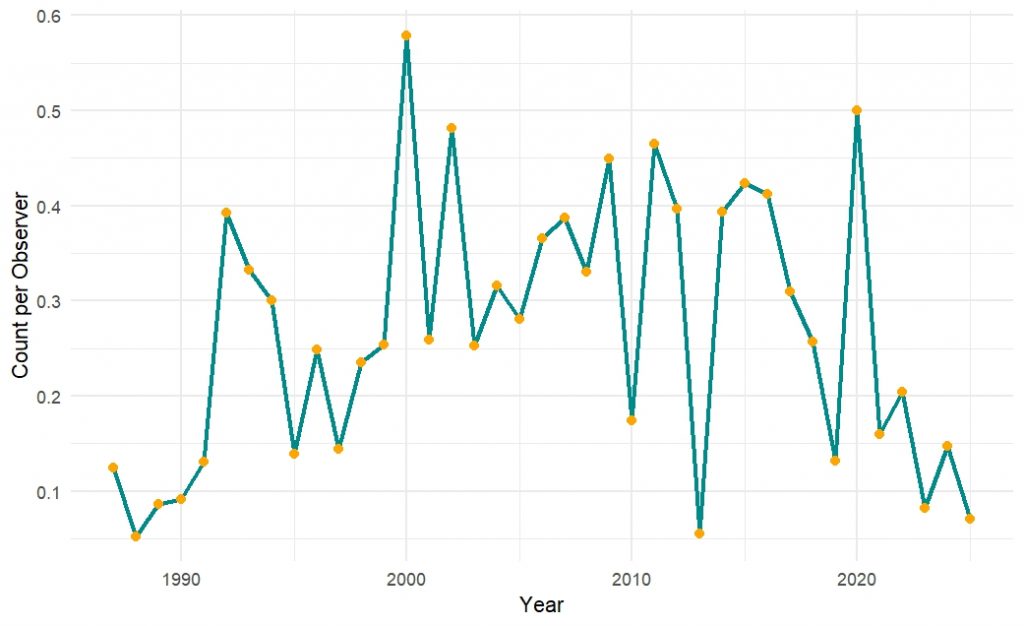
Cedar Waxwing Data 1987–2025
Cedar Waxwing data from the Backyard Winter Bird Survey (1987-2025). Each orange point shows the average number of Cedar Waxwings reported per observer in a given year. The blue line connects the points to highlight year-to-year changes.

What’s the Story?
A large flock of Cedar Waxwings is a delight to see in winter. These sleek, social birds rely primarily on fruit and travel widely in search of it, moving from one berry-laden tree to the next. These nomadic flocks may appear suddenly in your neighborhood and vanish just as quickly. One week you might have dozens in your yard and the next none at all.
Because of this Cedar Waxwings appear sporadically on the Backyard Winter Bird Survey, but rest assured they are doing just fine. Our analysis of Backyard Winter Bird Survey data from 1987 to 2025 shows that Cedar Waxwing populations in New Hampshire have remained stable, with no significant long-term trend. Breeding Bird Survey data also show stable summer populations across the state.
By planting native trees and shrubs that retain fruit into winter, you can help ensure that Cedar Waxwings always find a welcome stopover in your backyard.

Feeding Tips
- Cedar Waxwings rely on fruit, so you won’t see them at typical seed feeders. Instead, you can support them by planting trees and shrubs that hold fruit through winter. Good choices include crabapple, hawthorn, winterberry, juniper, and mountain ash.
- Cedar Waxwings play an important role in spreading seeds of native fruiting plants, helping forests and shrubs regenerate naturally.

In Your Backyard
- Cedar Waxwings travel in large flocks. You may hear them before you see them. Listen for their soft, high-pitched whistles.
- Bonus fact: During courtship, males often offer females a berry and gently pass it back and forth as a gift.

ID Tips
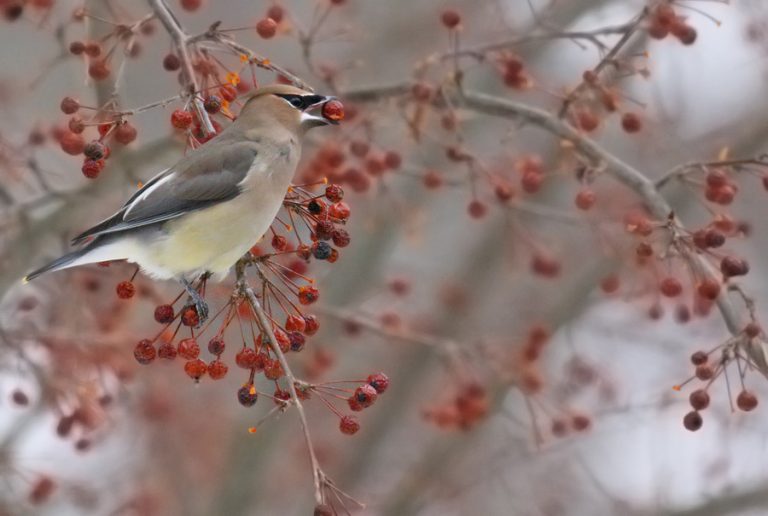
Cedar Waxwing by Len Medlock.
Cedar Waxwings are very sleek birds. They have yellow wash on the belly and a yellow band at the end of the tail. Look for the black bandit’s mask!