
Winter Trend: Decreasing
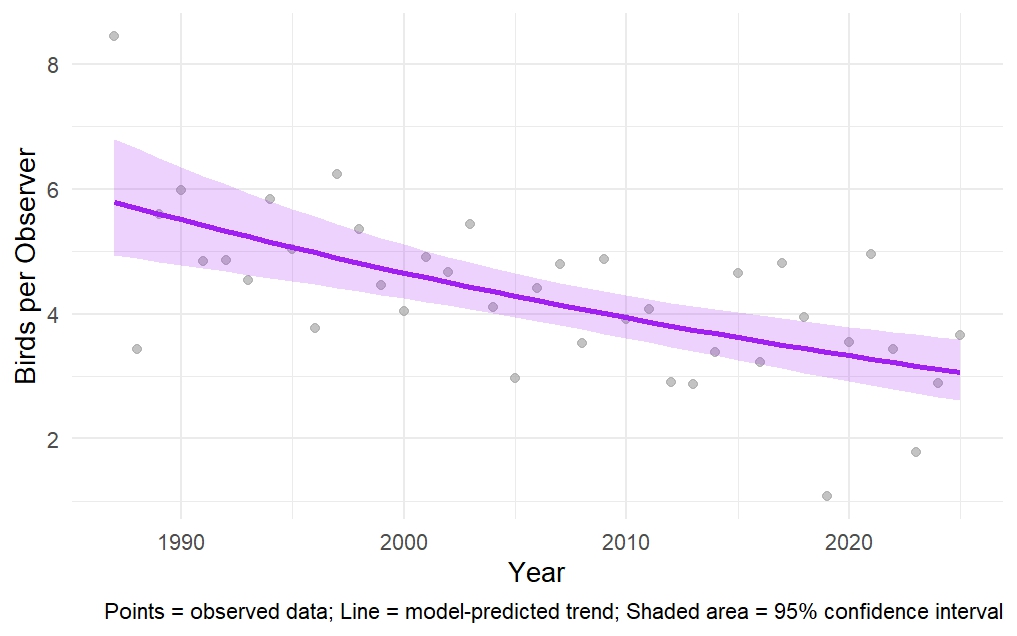
Blue Jays, 1987–2025.
The dark purple line shows the trend over time predicted by our statistical model, while the shaded purple area shows where we are 95% confident the true trend lies. Gray points are the number of Blue Jays actually observed in participants’ backyards, averaged per observer.

What’s the Story?
Blue Jays are instantly recognizable for both their loud calls and their striking blue plumage. While many remain in New Hampshire year-round, some migrate south in winter. This movement is closely tied to food supply. When acorns and other food sources are abundant, Blue Jays stay. When food is scarce, more Blue Jays head south in search of resources.
Our analysis of Backyard Winter Bird Survey data reveals a significant downward trend in winter reports of Blue Jays. A negative binomial regression shows a decline (β = -0.018 ± 0.004 SE, z = -4.539, p < 0.001).
This translates to reports of Blue Jays deceasing by about 2% per year, even when accounting for changes in the number of Backyard Winter Bird Survey participants over time.
There is, however, no need for alarm. Status and Trends data from eBird show that Blue Jay populations are actually increasing during the breeding season across much of the northeastern U.S. (check out the map here).
This contrast highlights the importance of monitoring birds throughout their entire annual cycle. A decline in winter numbers may not always signal an overall population decline. It could reflect changes in migration patterns or shifting food availability.

Feeding Tips
- Blue Jays enjoy whole peanuts, cracked corn, and sunflower seeds.
- At the feeder, Blue Jays can sometimes be aggressive toward smaller birds. To reduce conflicts, consider setting up a separate feeding station with peanuts to keep Blue Jays busy. They prefer feeding on elevated platforms.

In Your Backyard
- You’ll often hear a Blue Jay before you see it! They are common across many different habitats.
- Planting oak trees provides a long-term food source for Blue Jays and many other wildlife species. If you already have mature oaks, leave fallen acorns on the ground. They’re an important food source for wildlife.

ID Tips
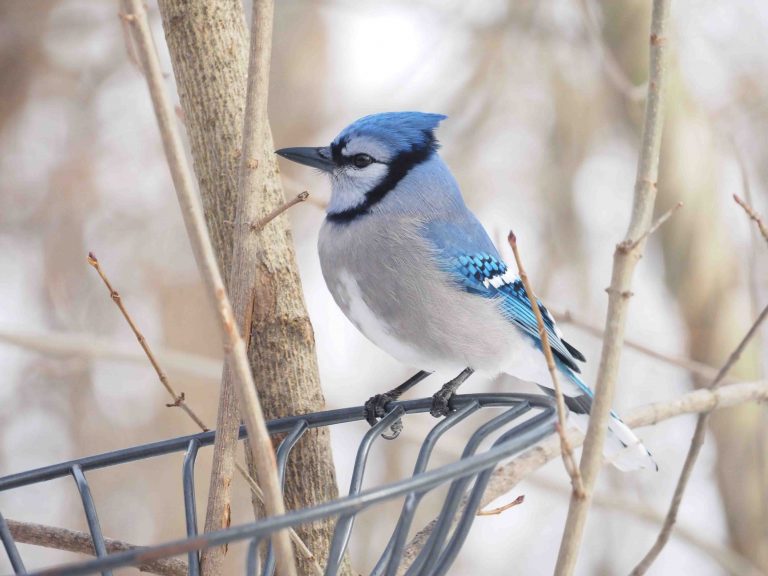
Blue Jay by Caitlin McMonagle, 2025 Backyard Winter Bird Survey.
Blue Jays are large and blue overall. Look for the prominent crest on head and listen for their noisy “jay” calls.