
Winter Trend: Stable
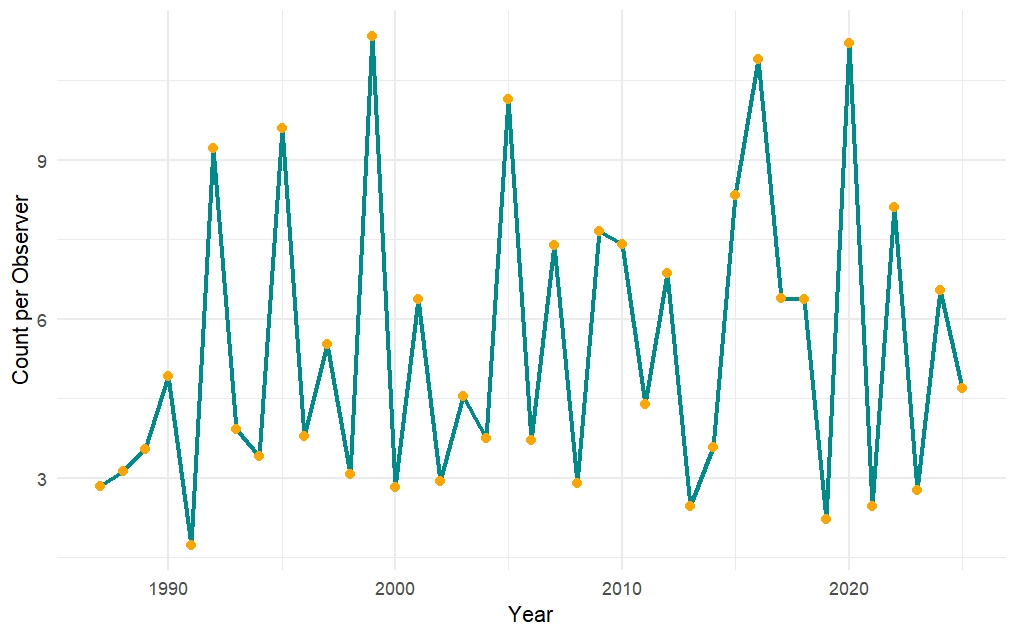
American Goldfinch Data 1987–2025
American Goldfinch data from the Backyard Winter Bird Survey (1987-2025). Each orange point shows the average number of American Goldfinches reported per observer in a given year. The blue line connects the points to highlight year-to-year changes.

What’s the Story?
American Goldfinch numbers fluctuate dramatically from year to year. They are an irruptive species, meaning that winter movements depend on food availability farther north. When seed supplies are low, more goldfinches move south into New Hampshire. When food is abundant up north, fewer are seen here. Their numbers often follow a biennial pattern—plentiful one year, scarce the next—which mirrors the natural cycles of seed-producing plants they depend on.
Our analysis of Backyard Winter Bird Survey data from 1987 to 2025 shows that American Goldfinch populations in New Hampshire are stable, with no significant long-term trend. That means the ups and downs you see are part of their normal cycle, rather than a sign of long-term decline.
American Goldfinches are seen throughout the year in New Hampshire, but did you know the ones at your feeder in winter may not be the same birds you enjoy in summer? Your local breeders often migrate farther south, while other goldfinches from Canada and northern New England move in to replace them.
Feeding Tips
- American Goldfinches prefer sunflower chips and seeds, as well as Nyjer.
- They will readily visit hanging tube feeders, especially those designed for finches.

In Your Backyard
- American Goldfinches are highly social. If you see one at your feeder, more are likely nearby.
- In summer, they are most often found in weedy fields, but in winter they readily visit backyard feeders across New Hampshire.
- Plant native asters, coneflowers, and other seed-producing flowers to provide natural food sources during the summer.
ID Tips
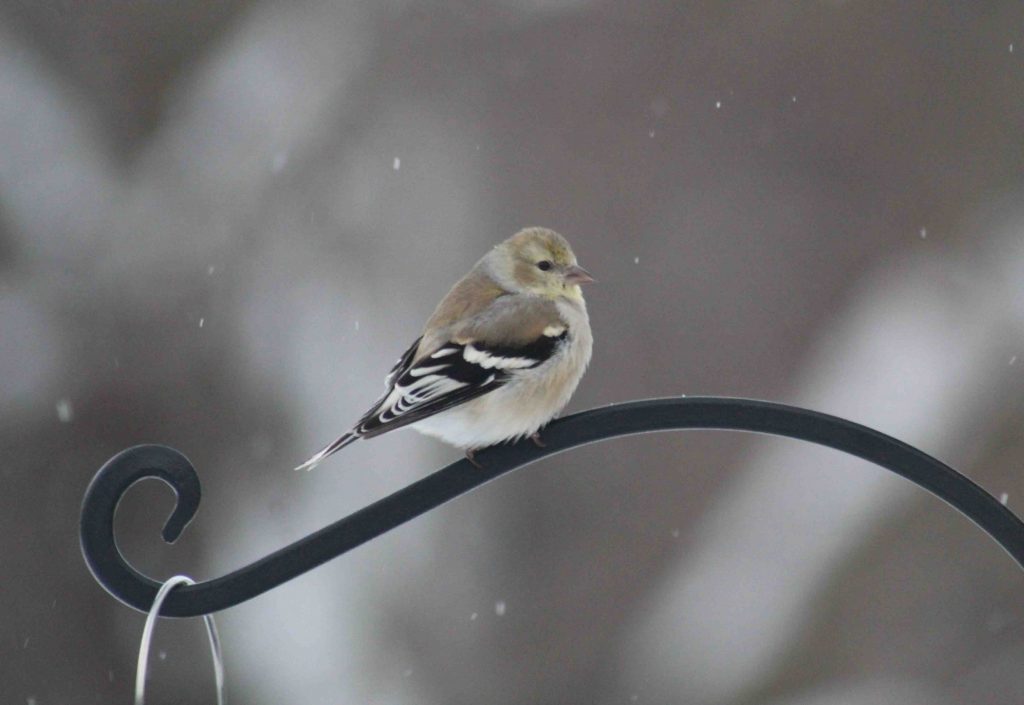
American Goldfinch by Aubrie Giroux, 2025 Backyard Winter Bird Survey.
American Goldfinches have a much different plumage in winter. Look for a small bird in muted yellow/brown in winter with black on the wings and buffy/yellow wing bars.