
Winter Trend: Uncertain
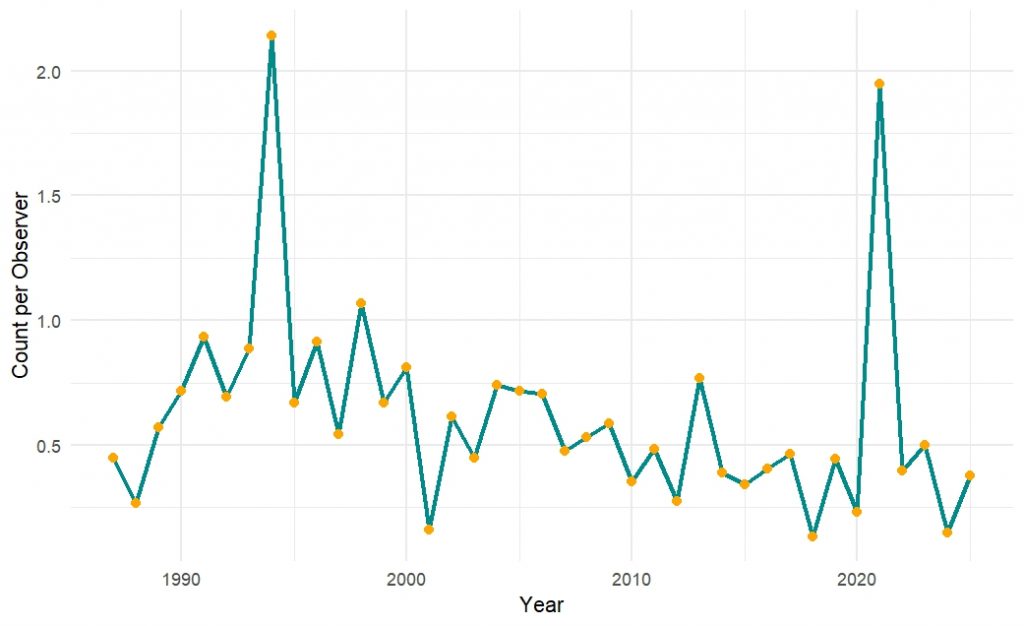
Red-breasted Nuthatch Data 1987–2025
Red-breasted Nuthatch data from the Backyard Winter Bird Survey (1987-2025). Each orange point shows the average number of Red-breasted Nuthatches reported per observer in a given year. The blue line connects the points to highlight year-to-year changes.

What’s the Story?
Red-breasted Nuthatches are energetic forest acrobats, climbing upside down on tree trunks. Though they breed in New Hampshire’s conifer forests, their numbers in winter can vary dramatically from year to year. Some winters they’re abundant at feeders, and other years they seem to vanish altogether.
Like Pine Siskins, Red-breasted Nuthatches are an irruptive species. Their winter movements are closely tied to cone crops across the boreal forest to our north in Canada. When cone production is poor farther north, they move south in greater numbers, sometimes in surprising abundance.
Our analysis of Backyard Winter Bird Survey data from 1987–2025 shows a slight decline, but the species’ large, periodic movements make it difficult to interpret long-term trends with confidence. The graph above shows the raw data to highlight this natural variability rather than a fitted trend.
Whether they’re plentiful or scarce in a given winter, hearing their nasal yank-yank calls is always a delight. It is also a reminder of how closely our winter birds are connected to forests far to the north.

Feeding Tips
- Red-breasted Nuthatches love black-oil sunflower seeds, sunflower chips, safflower, and even peanuts.
- They’ll also visit suet feeders, especially in colder months.
- Nuthatches often cache food for later, tucking seeds under bark or into tree crevices to retrieve when natural food is scarce.

In Your Backyard
- Red-breasted Nuthatches are most often found in conifer or mixed forests, but during irruption years they can turn up in a variety of places, including backyards and parks.
- Nuthatches are agile foragers that can climb headfirst down tree trunks and branches while searching for insects and seeds.
ID Tips
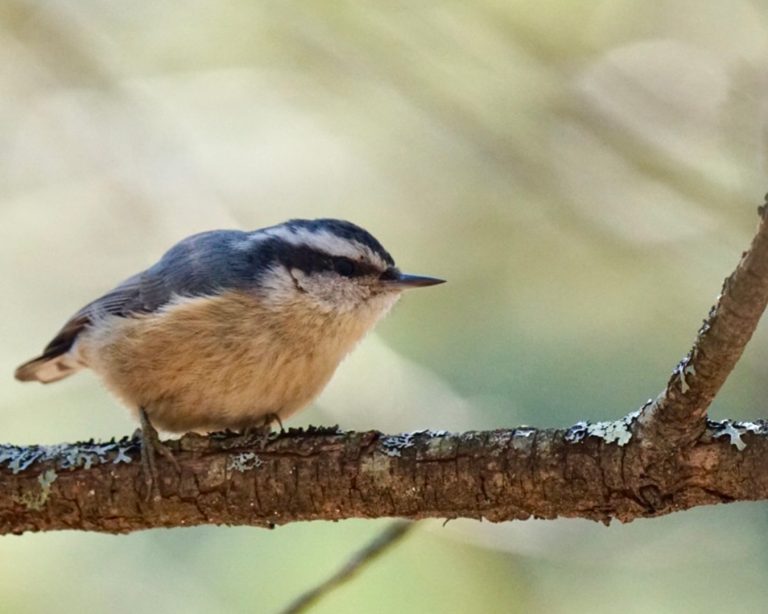
Red-breasted Nuthatch by Grace McCulloch.
Red-breasted Nuthatches are energetic! Look for the distinctive black and white markings on the head, the orange/ruddy belly, and the blue-gray back.