
Winter Trend: Increasing
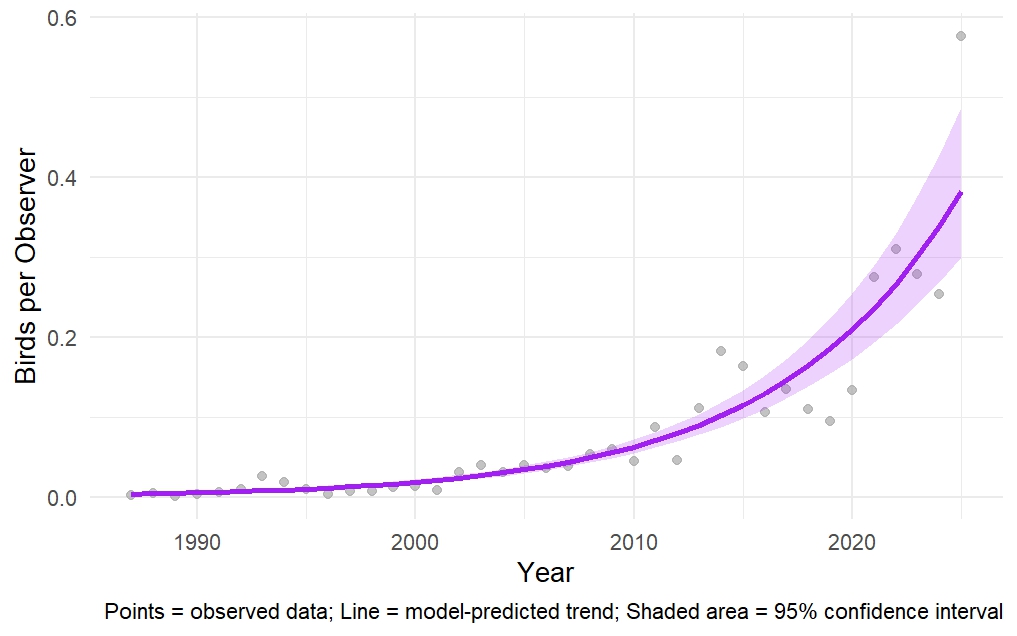
Carolina Wren, 1987–2025.
The dark purple line shows the trend overtime predicted by our statistical model, while the shaded purple area shows where we are 95% confident the true trend lies. Gray points are the numbers of Carolina Wrens actually observed in participants’ backyards, averaged per observer.

What’s the Story?
In the last few decades Carolina Wrens have made a remarkable range expansion into New Hampshire. Prior to the 1990s they were a rarity here, but today they are regularly reported south of the White Mountains. Warmer winters have made this expansion possible, though their populations still remain vulnerable to severe cold snaps. During harsh winters, many Carolina Wrens can die, but their numbers typically rebound in subsequent years. Carolina Wrens are a clear reminder of how even small shifts in snowfall or temperature can dramatically affect bird populations.
Our statistical analysis shows their remarkable and recent increase: a negative binomial regression shows a significant upward trend (β = 0.120 ± 0.006 SE, z = 18.63, p < 0.001). Note that a record number of Carolina Wrens were reported in 2025!
This translates to reports of Carolina Wrens increasing by about 13% per year, even when accounting for changes in the number of Backyard Winter Bird Survey participants over time.
Bird feeders have also been credited with helping facilitate their range expansion, providing Carolina Wrens food during a vulnerable part of the year. It’s no wonder they’ve become favorites at feeders. Who doesn’t enjoy the sight (and sound) of these bold, buzzy little wrens?

Feeding Tips
- Carolina Wrens enjoy a wide variety of foods including suet, mealworms, peanut hearts, and hulled sunflower seeds.
- Place suet feeders near dense shrubs or sheltered spots to provide a quick escape from predators lurking nearby.

In Your Backyard
- Provide dense shrubs or brush piles to give wrens essential shelter on cold nights. Carolina Wrens are also known to tuck themselves into porches, garages, or sheds for warmth.
- Carolina Wrens have a variety of buzzy songs and calls. They can be feisty, chasing away other birds at feeders.

ID Tips
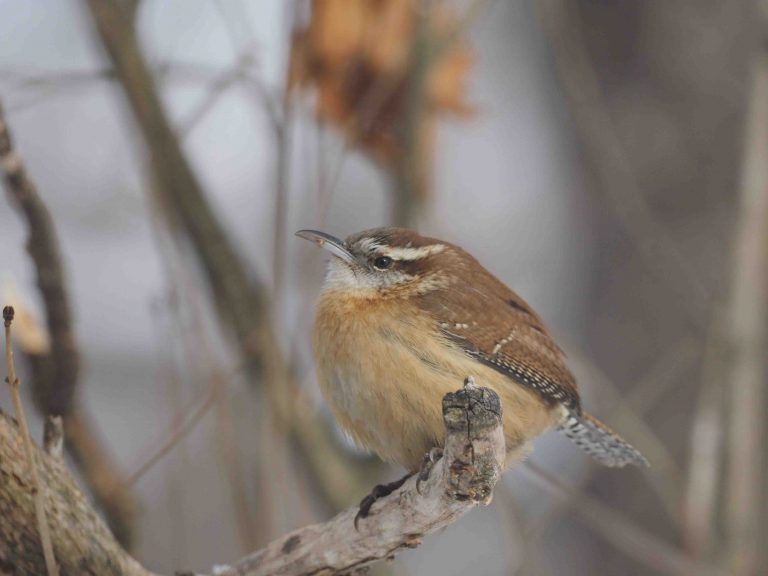
Carolina Wren by Caitlin McMonagle on her 2025 BWBS.
The Carolina Wren has a bright white eyebrow. Otherwise, the bird is buffy brown with a slightly decurved bill. Also look for the tail which usually sticks straight up.